Reaper vs. Audio Audit (comparison)
 Damian Moore, Last updated: 16 October 2026
Reaper is the DAW for people who like to build their own workbench. It’s a full professional audio workstation from Cockos — tiny download, runs on anything, updated at a pace that shames the industry (version 7.79 landed in August 2026, roughly the twenty-seventh release in ten months) — and it sells for $60 on the honour system: a fully-featured, DRM-free licence with a genuine 60-day evaluation and, in Cockos’s own words, “no artificial limitations”. We like Reaper so much we’ve already written a complete guide to mastering podcast audio in it.
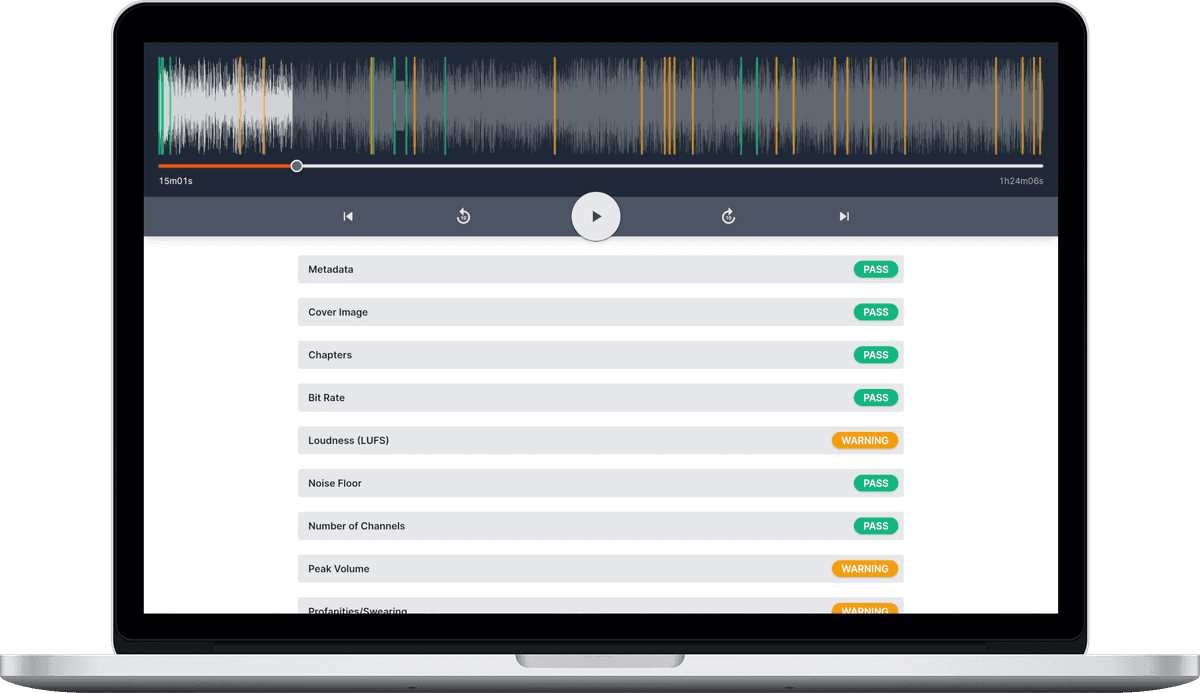
Unlike most tools on this shelf, Reaper can measure things. Its render statistics report integrated LUFS and true peak natively, a dry-run render gets you the numbers without writing a file, and render normalisation will hit a LUFS target you type in. A determined Reaper user can hand-build most of a technical audit. The question this page answers is what that costs in effort, and what’s left over: the detection, the checks-as-reports, and everything after publish. That’s Audio Audit’s half. It analyses the finished file, fixes what fails with Enhancements, verifies by re-running the report, and monitors the feed from then on.
Reaper gives you the parts to build your own quality control. Audio Audit is that quality control already built, and it keeps watching after you publish.
This page was last fact-checked against reaper.fm in September 2026.
Comparison Overview
File and Metadata Checks
| Feature | Reaper | Audio Audit |
|---|---|---|
| Metadata checking | ❌ No, though it writes rich ID3 metadata on render | ✅ Yes |
| Cover art checking | ❌ No, though album art can be embedded on MP3 render | ✅ Yes |
| Chapter checking | ❌ No, though markers render to MP3 chapter tags | ✅ Yes |
| Bit-rate checking | ❌ No, the batch converter shows file properties rather than checking them | ✅ Yes |
| Sample-rate checking | ❌ No | ✅ Yes |
| Sample-width checking | ❌ No | ✅ Yes |
| Channel count checking (stereo/mono) | ❌ No | ✅ Yes |
Analysis and Detection
| Feature | Reaper | Audio Audit |
|---|---|---|
| LUFS/loudness checking | ✅ Yes — render statistics and dry-run renders report LUFS-I natively | ✅ Yes |
| Peak volume checking | ✅ Yes, true peak in the same render statistics | ✅ Yes |
| Noise floor checking | ❌ No | ✅ Yes |
| Unwanted noise detection (coughs, knocks, pets, etc.) | ❌ No | ✅ Yes, dozens of noise types |
| Filler word detection (uhm, ahh, etc.) | ❌ No | ❌ No |
| Long silence detection | ❌ No, Dynamic Split cuts by gate rather than flagging | ✅ Yes |
| Restarted sentence detection | ❌ No | ✅ Yes |
| Swearing detection | ❌ No | ✅ Yes |
| Automatic transcriptions | ❌ No | ✅ Yes |
Enhancement and Editing
| Feature | Reaper | Audio Audit |
|---|---|---|
| Audio file modification | ✅ Yes | ✅ Yes (Enhancements) |
| One-pass enhancement of a finished episode | ❌ No, you build the chain yourself | ✅ Yes — measured processing, no generative AI |
| Noise reduction | ✅ Yes, ReaFIR with a captured noise print | ✅ Yes, profile measured from your recording |
| Speech levelling (compression) | ✅ Yes, ReaComp and friends | ✅ Yes |
| Loudness normalisation (LUFS targets) | ✅ Yes — render normalisation to any LUFS-I target you type | ✅ Yes, presets for podcasts, YouTube and ACX |
| Metadata & cover art writing | ✅ Yes — ID3 tags, chapters and album art on MP3 render | ✅ Yes, without re-encoding audio |
| Automatic filler word removal | ❌ No | ❌ No |
| Automatic silence removal | ✅ Yes, via Dynamic Split — once you’ve configured it | ❌ No |
| Transcript-based editing | ❌ No | ❌ No |
Monitoring and Reporting
| Feature | Reaper | Audio Audit |
|---|---|---|
| Automatic reports by email | ❌ No | ✅ Yes |
| RSS feed monitoring | ❌ No | ✅ Yes |
| Scoring over the long-term across shows and team members | ❌ No | ✅ Yes |
Plans and Pricing
| Feature | Reaper | Audio Audit |
|---|---|---|
| Free trial | ✅ Yes, a fully-functional 60-day evaluation | ✅ Yes |
| Free tier | ❌ No, but the licence is $60 once for most people | ✅ Yes, free credits every month |
| Pricing model | Perpetual licence — $60 (personal/small business) or $225 (commercial), identical features | Pay-as-you-go credits or subscription — see /pricing |
| One-off credit top-ups (no subscription needed) | ✅ In spirit — the licence is a one-off buy | ✅ Yes — credit packs valid 12 months |
The DIY Champion
Reaper’s virtues compound the longer you look. Sixty dollars buys the whole program: the same binary as the $225 commercial licence, with no feature gates, and a 60-day evaluation with nothing switched off. It’s “efficient, fast to load, and tightly coded”, runs from a USB stick if you want, and can be scripted and reshaped into almost any workflow, which is what podcasters do with it. It renders MP3s with proper ID3 metadata, chapter markers from your project markers, and embedded album art; the batch converter will process a folder of files with the same settings; and since late 2025 it can even embed measured loudness values into rendered files. For a music DAW, it has become one of the most podcast-capable programs anywhere, for the user willing to rig it.
That’s the constant caveat, and reviewers have said it for years: out of the box, Reaper is a parts kit with a famously unloved default interface. Everything above is possible; none of it is default. Our Reaper mastering guide exists precisely because the path from empty project to broadcast-ready episode is real but unmarked.
Audio Audit builds none of your episode and has no plans to bluff at it. We detect — long silences, restarted sentences, coughs and car alarms, each timestamped — and you cut them in your editor. Reaper, very plausibly.
Loudness: Reaper Can Do the Whole Job — If You Build It
The standard loudness for podcasts is -16 LUFS, and our customers tell us it’s the number one thing they check their reports for.
Give Reaper its due plainly: it is one of the only tools on this entire site that can both measure integrated loudness and true peak natively and normalise to a LUFS target you choose — the two halves most competitors split or skip. A dry-run render reports LUFS-I, LRA and true peak without writing a file; render normalisation hits your typed target on the way out; the numbers can even be stamped into the file’s metadata. Configure it once, save the render preset, and Reaper will do loudness correctly forever.
The honest difference is who does the configuring, and what never gets configured. The knowledge lives in you: which stats to read, what target to type, to check the dry run every episode including the ones you render at midnight. And the audit stops at the measurements Reaper takes — nothing reports the noise floor, nothing checks the file you didn’t render in Reaper, and nothing looks at an episode again after it leaves. Audio Audit is the same rigour without the rigging: one report on any finished file with the loudness, true peak and noise floor together, normalisation presets (-16 podcast, -14 YouTube, -19 ACX) with true-peak-safe limiting on the same ITU-R BS.1770 model, and a fresh report to verify the numbers moved.
What Reaper Won’t Hear
No DAW listens to content, and Reaper doesn’t pretend to: no silence flagging (Dynamic Split cuts silence wherever the level drops below a gate threshold, but you set it up by hand and it never tells you what it cut), no restarted sentences, no swearing flag, no transcription, no noise-event classifier. And after the render, nothing: no feed monitoring, no reports, no history. Hosts re-encode, and a re-encode can shift your loudness and clip your peaks long after your carefully-built render chain has done its job.
That’s the half Audio Audit covers: the content detection with timestamps, the full file check with fixes pre-ticked (metadata-only changes don’t re-encode the audio at all), and the feed monitor re-checking what your host actually serves — every episode, with reports by email and scores that build across episodes, shows and team members.
Paying For It
Reaper’s pricing needs one sentence and deserves two: $60, once, for almost everyone (the $225 commercial tier applies above $20k yearly revenue and buys the identical program), after a 60-day evaluation that trusts you. It’s the most honest licence in audio software, and if more of this industry copied it, our Paying For It sections would be shorter.
Audio Audit runs on credits, with free credits every month, monthly plans if your usage is steady, and one-off top-up packs valid for 12 months if it isn’t — closer in spirit to Reaper’s buy-it-when-you-need-it honesty than to the subscriptions elsewhere on this shelf. Reports and enhancements draw on the same balance, the estimate shows before you commit, and current prices live on the pricing page rather than in this article, because comparison pages go stale and pricing pages don’t.
So Which One?
If you enjoy building your tools and want a DAW that will grow with you for a one-off $60, use Reaper. Our mastering guide shows you how to wire up the loudness workflow properly, because Reaper can do that job.
If you want the audit without the rigging — every measurement in one report, the content detection no DAW attempts, the fixes applied and verified, and your feed watched from then on — that’s Audio Audit.
And for the Reaper faithful, the chain is the point: build and render in Reaper with your loudness preset, then run the file through Audio Audit for the independent second opinion and the checks your render chain doesn’t make — and point the feed monitor at your show to catch what your host does to the file after your part of the craft is done.
Want the full detail on what Audio Audit’s enhancements do? See the Enhancements announcement and the Enhancing Audio guide, or head to the Pricing page to see what a report or an enhancement costs for your episode length. Comparing other tools too? We’ve written the same honest breakdown for Audacity, Auphonic, Alitu, Descript, Adobe Podcast Enhance and Cleanvoice.
Photos courtesy of Dave Hoefler