Be sure that your podcast is perfect each time you publish.
Audio Audit identifies common problems that you might have missed. That means every episode sounds brilliant.
Free plan: about an hour of audio a month. No credit card.
Sign up free ⇢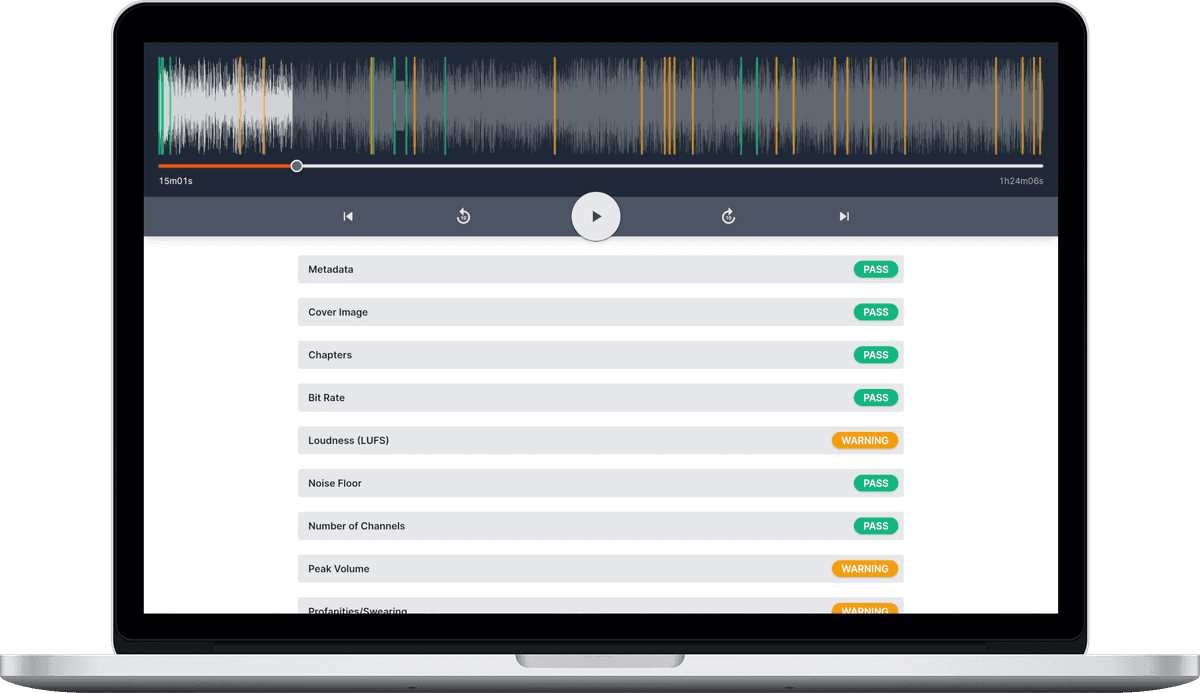
Sequences have been shortened
Who’s Using Audio Audit?
Record, edit and produce your own podcast?
Your podcast may sound fine to you but there are lots of things to check for. Audio Audit’s automated QA can make your podcast look and sound more professional by improving your workflow. We highlight the areas of concern within an episode and show you how to fix them, improving overall quality. Podcasters everywhere are seeing the benefits and solving problems.
Using a production company to publish your podcast?
Even if you’re entrusting professionals with the production side of things, there’s always a possibility they forgot something or aren’t aware of some standards. The Audio Audit tool can check whether they are providing the best listener experience and including all possible metadata. Most podcasts we check have at least one warning. Get peace of mind that your producers are doing everything they can to make your podcast shine.
Work at a recording studio or podcast network?
You want every episode to meet spec — it’s your reputation on the line — but checking a whole roster of shows by hand each day is out of the question. Audio Audit checks each episode as it’s published: swearing, loudness, encoding and metadata. When staff change or temporary cover steps in, your standards still hold — and we can help you customise the checks to fit your own requirements.
Schedule a call to discuss your needs further ⇢orSign up for free in less than a minute ⇢
Free plan, no credit card needed.
Audio Audit is a web-based tool that checks podcast episodes for loudness, noise, silences, swearing, metadata and more, then shows you how to fix what it finds. Upload a file or point it at your RSS feed, and every new episode is checked automatically, so a show sounds right whether it’s playing on Spotify, Apple Podcasts, Amazon Music or anywhere else — without anyone having to listen to it again.
Some of the checks we run…
Volume and loudness
Have you ever had to turn the volume up to listen to one podcast and then had your ears blasted when the next one starts?
Perceived loudness isn’t the same as peak level, and the big platforms have standardised on what they expect — Apple’s guidance is −16 LUFS. We measure loudness, peak and channel balance, then tell you exactly how far off you are and in which direction.

Background noise and unwanted sounds
A fridge humming in the next room, a passing siren, the cat deciding now is the moment. You stopped hearing them during the edit because you’d already heard the episode twenty times — your listeners haven’t.
We measure your noise floor against the −60 dB the industry expects, and use a sound-recognition model to pick out coughs, barks, door slams and phone notifications. Each one is marked on the waveform, so you can click straight to it and decide whether it stays.

Silence in the wrong places
A common mistake is to leave too much silence at the end, or too short a gap at the beginning. It usually happens after you or your sound engineer has made a few cuts but the file has stayed the same length.
It’s confusing for a listener who thinks the next episode in their queue should have started by now — are they at the end of the queue, or has something broken? We also flag long gaps in the middle, which are often the first sign that a jingle or a clip didn’t make it into the final export.
Restarted sentences
In scripted scenarios voice artists will sometimes misread and want to record the sentence again. If a proper note of this isn’t made at the time of recording then the person editing often won’t notice and the mistake won’t get cut out.
Our speech recognition reads the whole episode and highlights phrases that look like second attempts — one more layer of proofing, in case you missed them.

Profanities and swearing
Depending on your audience or syndication partners you may choose to bleep out or silence swearing on your show. It can have a reputational cost if you accidentally leave them in.
We match the transcript against our word list and highlight every hit in the report with its exact position. Click the marker in our built-in player to hear it right away.
Encoding and file quality
With so many options to choose from when exporting it’s hard to know what’s suitable — bit rate, sample rate, bit depth, mono or stereo. Even if you pick good settings, you want to guard against them being changed by accident somewhere down the line.
We check your files against the ranges the podcast and audiobook industry has settled on, so a bad export gets caught before your listeners find it.
Metadata, artwork and chapters
Your RSS feed no doubt has your episode title, show name and cover artwork — but does the audio file itself? If someone downloads or shares the MP3 directly, that file is all your branding has to work with.
We check the tags embedded in the file, and check your cover image is square, big enough for every player and not so large it slows the download. We’ll also tell you whether you’ve added chapter markers, so listeners can jump straight to the segment they came for.
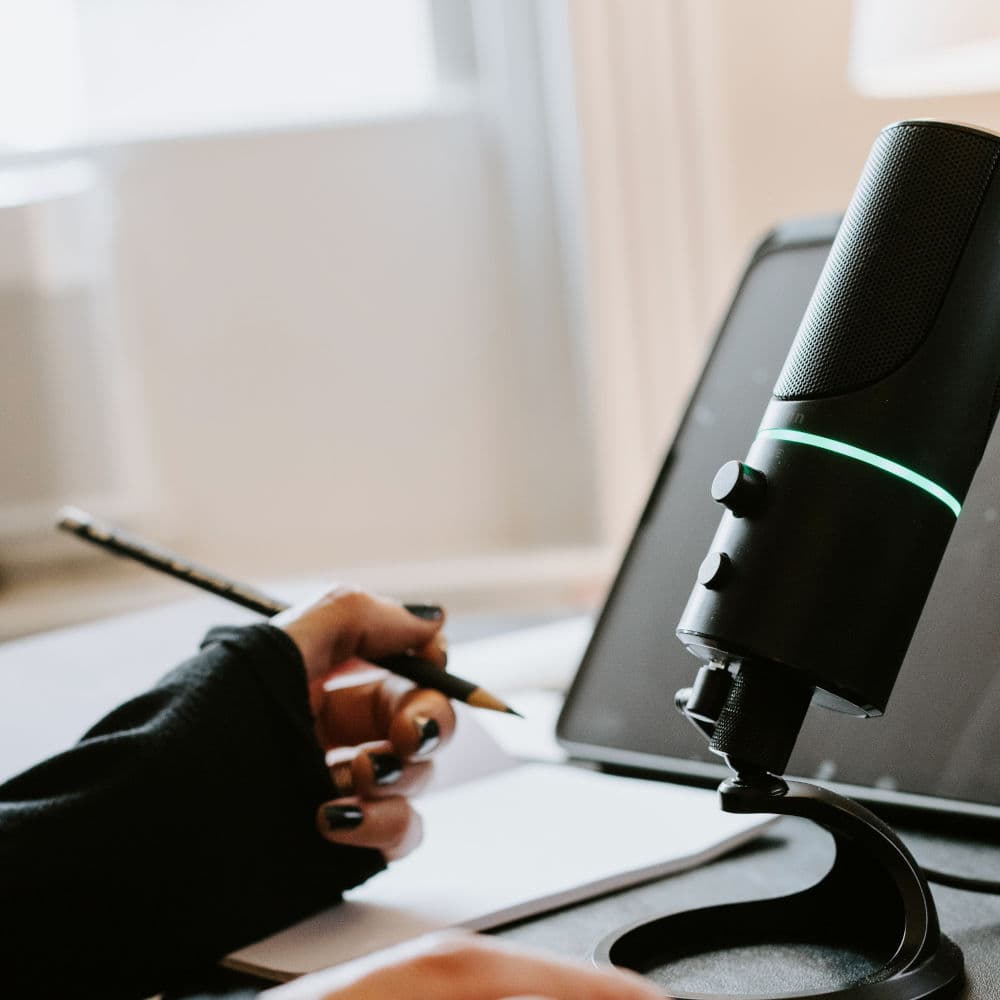
…and we check these too
- Peak volume — the loudest moment in the file, and whether it’s clipping
- Noise floor — how much hiss and hum sits under your voice
- Quiet channel — one side of a stereo file much quieter than the other
- Bit rate — how much data is used for each second of audio
- Sample rate — how many times a second the waveform is captured
- Bit depth — how finely each of those samples is measured
- Channels — mono or stereo, and whether that’s the right call
- Cover image — embedded artwork, its dimensions and its file size
- Chapter markers — so listeners can navigate to a segment
Each check has its own explainer, and the full list is on the podcast checker page.
And it doesn’t stop at one episode…
Every new episode, checked automatically
Running a check by hand is fine once. Remembering to do it every week, on deadline, for every show you look after — that’s where it slips.
Turn on automatic checking for a podcast and we’ll watch its feed for you. The moment a new episode appears we run the full report and email you the result, with the score and whether it went up or down since last time. Nothing to upload, nothing to remember.

Don’t just find the problems — fix them
Knowing your episode is 4 dB too quiet doesn’t help much at eleven at night when it needs to go out. So we’ll do it for you.
Audio Audit can reduce background noise, even out the gap between loud and quiet speech, bring the whole episode to a target loudness — −16 LUFS for podcasts, −14 for YouTube, −19 for ACX — and write clean tags and cover art onto the file. It works on the audio we’ve already analysed, so there’s nothing to re-upload, and whatever the checks flagged is pre-selected for you.

We watch your feed, not just your audio
A perfect episode is no use if the feed serving it is down. Hosting outages are quiet failures — nothing alerts you, listeners simply don’t get the episode, and you find out days later.
We check your feed on a schedule and keep the results. You get uptime over the last day, week and month, response times plotted over time, and a clear flag when a feed has stopped answering — so you can take it up with your host with the evidence in hand.

A transcript with every episode
The same speech recognition that finds restarted sentences and swearing produces a full transcript of your episode, timed to the word.
Click any phrase to jump to that moment in the player, or download it as WebVTT, SRT or plain text. Publishing it alongside your audio makes your show searchable, helps hearing-impaired listeners, gives search engines something to index, and turns one episode into show notes, quotes and social posts.
Watch your show get better
One report tells you about one episode. What you actually want to know is whether the changes you made last month stuck.
Every podcast gets a score history, so you can see quality trending across recent episodes at a glance — and spot the week something in your workflow changed for the worse, rather than discovering it three episodes later.
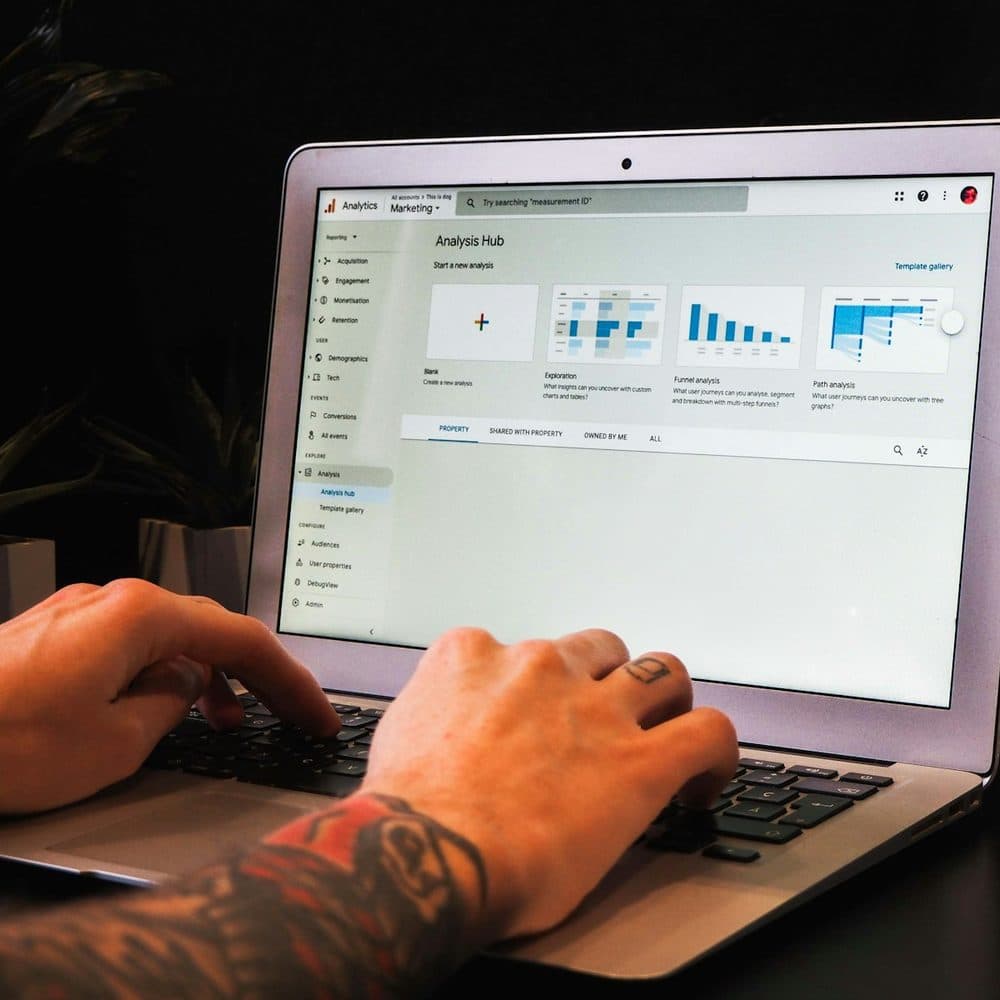
Built for teams and their clients
Shared workspaces
Bring your producers, editors and clients into one workspace. Everyone sees the same reports, and you decide who can manage which podcasts and who can only look.
Send a client a link
You don’t need to give a client an account to show them a report. Share the link — or the QR code — and they can open it, listen along and see exactly what was flagged.
Wire it into your own tools
Studios running their own pipelines can create an API key and drive Audio Audit from our REST and GraphQL APIs — kick off reports and pull results into whatever you already use.
I find Audio Audit a really useful tool to help us ensure consistency across our output and to spot any issues, especially with loudness or peaking, that we may have missed.

Declan Conlon
Head of Audio at The Irish Times
The tool gives this podcast an 80% score and now we’ve added ID3 tags today it’ll be even higher tomorrow.

James Cridland
Editor of Podnews
The four-letter-word check. Something slip through? Well, you’ve got that check, it’s Audio Audit.

David Hooper
Podcast Marketing Expert
Don’t waste your time on the things you are already getting right, just focus on the problems you have and make your podcast sound amazing.
Schedule a call to discuss your needs further ⇢orSign up for free in less than a minute ⇢
Free plan, no credit card needed.
Ready to start creating better podcasts?
Your dashboard is only a click away.
Sign up
You start on the free plan — about an hour of audio a month, no credit card needed. Once registered you go straight to your dashboard, where you can upload audio and see previous reports. There are no more steps after this page.