Resound vs. Audio Audit (comparison)
 Damian Moore, Last updated: 15 October 2026
Resound is what happens when a podcast production agency turns its in-house tooling into a product. It was founded by the team behind Resonate Recordings — the agency that produced Culpable and a shelf of other chart-topping shows — and it does a deliberately narrow job well: it detects the ums, ahs and long pauses in your recording, shows you each one, and lets you decide what to cut. Its motto is the most quotable line in this category: “Resound suggests, you decide.” Add a one-click Enhance pass for noise, EQ and loudness, and that’s the product.
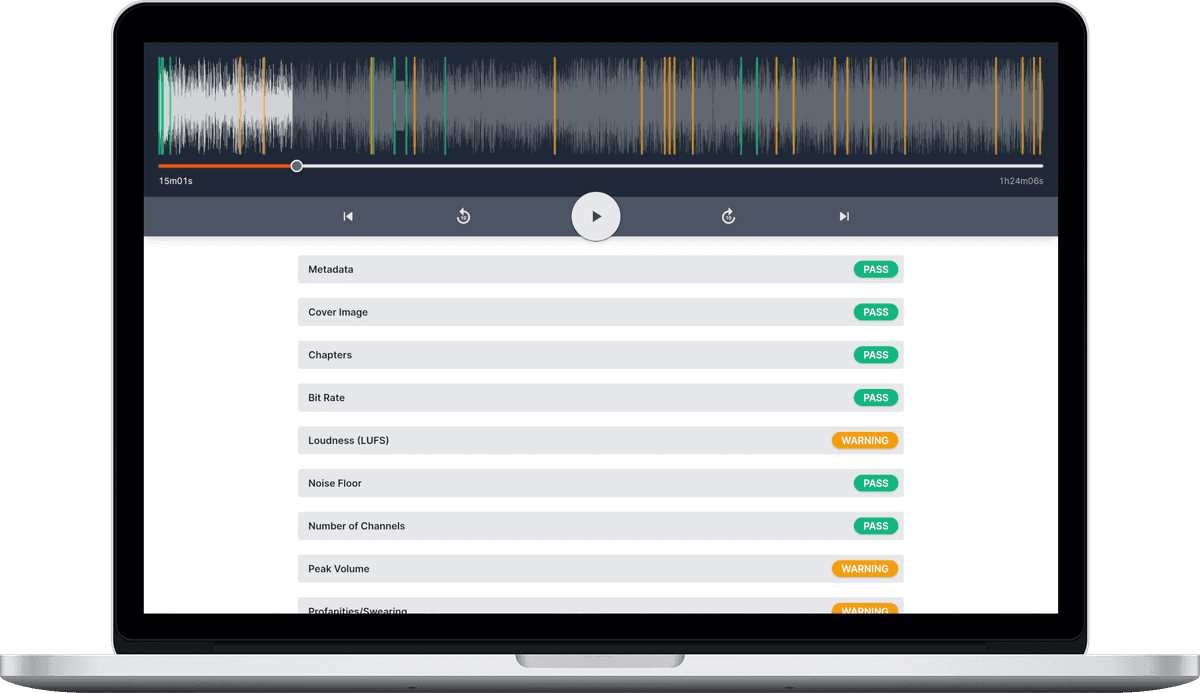
Audio Audit shares more philosophy with Resound than with almost anything else on this shelf — detection you review, not silent black-box edits — and still does a different job. Resound detects in order to cut; Audio Audit detects in order to report: the same long pauses, plus restarted sentences, swearing and stray noises, next to the measurements no editor gives you — loudness, true peak, noise floor, bit rate, metadata, artwork. As of August 2026 it fixes what it finds too, with Enhancements for noise reduction, speech levelling, loudness normalisation and clean metadata, verified by re-running the report. Analyse, fix, verify — and then keep watching the feed.
The short version: Resound tidies the conversation; Audio Audit certifies the file — and keeps certifying it after you publish.
This page was last fact-checked against resound.fm in September 2026.
Comparison Overview
File and Metadata Checks
| Feature | Resound | Audio Audit |
|---|---|---|
| Metadata checking | ❌ No | ✅ Yes |
| Cover art checking | ❌ No | ✅ Yes |
| Chapter checking | ❌ No | ✅ Yes |
| Bit-rate checking | ❌ No — no bit-rate controls or reports yet, by their own account | ✅ Yes |
| Sample-rate checking | ❌ No | ✅ Yes |
| Sample-width checking | ❌ No | ✅ Yes |
| Channel count checking (stereo/mono) | ❌ No | ✅ Yes |
Analysis and Detection
| Feature | Resound | Audio Audit |
|---|---|---|
| LUFS/loudness checking | ❌ No, Enhance masters to a target without reporting a figure | ✅ Yes |
| Peak volume checking | ❌ No | ✅ Yes |
| Noise floor checking | ❌ No | ✅ Yes |
| Unwanted noise detection (coughs, knocks, pets, etc.) | ❌ No, background noise is reduced rather than flagged | ✅ Yes, dozens of noise types |
| Filler word detection (uhm, ahh, etc.) | ✅ Yes — non-word sounds, each shown for your cut-or-keep decision | ❌ No |
| Long silence detection | ✅ Yes, pauses over three seconds, same review workflow | ✅ Yes |
| Restarted sentence detection | ❌ Not yet — repeat and stutter detection are on their “coming” list | ✅ Yes |
| Swearing detection | ❌ No | ✅ Yes |
| Automatic transcriptions | ❌ No, it’s on their public roadmap | ✅ Yes |
Enhancement and Editing
| Feature | Resound | Audio Audit |
|---|---|---|
| Audio file modification | ✅ Yes | ✅ Yes (Enhancements) |
| One-pass enhancement of a finished episode | ✅ Yes (Enhance), one click | ✅ Yes — measured processing, no generative AI |
| Noise reduction | ✅ Yes — noise, reverb and crosstalk, powered by Auphonic | ✅ Yes, profile measured from your recording |
| Speech levelling (compression) | ✅ Yes, part of the Enhance pass | ✅ Yes |
| Loudness normalisation (LUFS targets) | ✅ Yes, one fixed target (-16 LUFS, per their support team) | ✅ Yes, presets for podcasts, YouTube and ACX |
| Metadata & cover art writing | ❌ No | ✅ Yes, without re-encoding audio |
| Automatic filler word removal | ✅ Yes — after your review, or all at once with one click | ❌ No |
| Automatic silence removal | ✅ Yes, same review-then-cut workflow | ❌ No |
| Transcript-based editing | ❌ No, editing is waveform-based by design | ❌ No |
Monitoring and Reporting
| Feature | Resound | Audio Audit |
|---|---|---|
| Automatic reports by email | ❌ No | ✅ Yes |
| RSS feed monitoring | ❌ No | ✅ Yes |
| Scoring over the long-term across shows and team members | ❌ No | ✅ Yes |
Plans and Pricing
| Feature | Resound | Audio Audit |
|---|---|---|
| Free trial | ✅ Yes, 14 days with an hour of processing | ✅ Yes |
| Free tier | ✅ Yes — 20 minutes a month, MP3 export, one-day project storage | ✅ Yes, free credits every month |
| Pricing model | Subscription tiers by processed hours ($15–$60/month); unused hours don’t roll over | Pay-as-you-go credits or subscription — see /pricing |
| One-off credit top-ups (no subscription needed) | ❌ No | ✅ Yes — credit packs valid 12 months |
Detection Done the Honest Way
Resound’s core feature is built the way this kind of automation should be. Its filler detection runs on machine-learning models the team trained themselves, in collaboration with working audio engineers, and every detection is presented on the waveform for a decision: cut it, or keep it. Their API documentation quotes an 88% acceptance rate on suggestions — a number that only exists because the workflow lets you reject the other 12%, which is precisely the point. A “Cut All Filler Sounds” button exists for the confident; the review is there for everyone else. We’ve praised Alitu and Async for the same pattern, and Resound arguably does it most purely: the whole product is that loop.
The scope is honest and narrow, and Resound says so themselves: detection covers non-word filler sounds — the ums, ahs, ers and hms — not filler words like “like” and “you know”, and repeat and stutter detection sit on their “coming” list rather than in the product. Editing is waveform-based rather than transcript-based, the editor shows one track at a time, and there’s no recording, hosting or transcription.
Audio Audit’s detection is the same philosophy pointed at a different deliverable. We find the long silences too — though not the fillers, which are Resound’s speciality — plus restarted sentences, swearing, and dozens of unwanted-noise types from coughs to car alarms — and we hand you a timestamped report rather than a cut list, because our job is to tell you the state of the episode, not to edit it. If seeing the report sends you to Resound to do the cutting, that’s the tools composing exactly as they should.
Enhance: The Right Target, Set in Stone
The standard loudness for podcasts is -16 LUFS, and our customers tell us it’s the number one thing they check their reports for.
Resound’s Enhance pass is well-founded: it’s “proudly powered by Auphonic” — the most respected automated processor in podcasting, which we’ve compared directly — tuned by Resonate’s engineers, and it covers noise, reverb and crosstalk reduction, EQ, speech levelling and loudness normalisation in one click. And the target is the right one: their marketing page says only “streaming standards”, but their support team is on record that Enhance masters to -16 LUFS.
Two things follow, both familiar from this series. The target is fixed — no -14 LUFS for YouTube, no -19 for ACX audiobooks, no custom value, and by their own account no bit-rate or mono/stereo controls yet either. And no measured figure is reported back: -16 is what Enhance aims for, not a number you’re shown it achieved. Audio Audit treats loudness as your decision, verified: presets for podcast platforms (-16), YouTube (-14) and ACX (-19) with true-peak-safe limiting and a custom option, on the same ITU-R BS.1770 model broadcast uses — measure the whole episode, apply one constant gain change, never touch how it breathes — and then the fresh report puts the achieved loudness next to the true peak, in writing.
What Resound Doesn’t Look At
Resound reads your audio; it doesn’t read your file. Nothing checks the metadata, the cover art, the chapters, the bit rate, the sample rate or the channel count — the things a podcast directory inspects before a listener hears a second of your tidy edit. Nothing measures the noise floor or the peak. And nothing follows the episode after export: no feed monitoring, no email reports, no history.
Audio Audit picks up the whole layer. The report checks the finished file against everything a directory and a listener care about, with the failing checks’ fixes pre-ticked — and if metadata is the only thing you change, the audio isn’t re-encoded at all. Then the feed monitor re-checks the file your host actually serves, which isn’t always the file you uploaded: hosts re-encode, and a re-encode can shift your loudness and clip your peaks long after every tool in your chain has finished and gone home. Reports arrive by email, scores build across episodes, shows and team members, and the trend tells you whether your audio is quietly getting worse.
Paying For It
Resound is a subscription metered in processed hours. As of September 2026: a free tier with 20 minutes a month (one track, MP3 export, projects kept for a day), a 14-day trial with an hour of processing, then Creator at $15 a month for 4 hours, Professional at $30 for 10, Studio at $60 for 30 with API access, and a custom Enterprise tier above. The catch to know: unused hours expire at the end of each billing period — no rollover. Check resound.fm/pricing for today’s figures rather than trusting this paragraph in a year’s time.
Audio Audit runs on credits, with free credits every month, monthly plans if your usage is steady, and one-off top-up packs valid for 12 months if it isn’t — a shelf life worth comparing with hours that vanish monthly. Reports and enhancements draw on the same balance, and you see the estimate before you commit. Current prices live on the pricing page rather than in this article, because comparison pages go stale and pricing pages don’t.
So Which One?
If your editing bottleneck is the ums and the dead air, and you want them found by a model that shows its work and lets you overrule it, use Resound. It’s the purest expression of review-first automation in podcasting, built by people who edited shows for a living — and, credit where due, a company comfortable enough with comparisons to publish its own vs. pages.
If you want to know whether the finished file is actually fit to publish — the loudness figure Enhance aims at but never shows, the checks no editor runs, the fixes verified by measurement, and a monitor on your feed from then on — that’s Audio Audit.
And they chain neatly: run the report, let it flag the silences and restarts, take the file to Resound to cut the fillers and dead air, Enhance if you like — then run the fresh report to see the numbers, write the tags and artwork, and point the feed monitor at your show for every episode after this one.
Want the full detail on what Audio Audit’s enhancements do? See the Enhancements announcement and the Enhancing Audio guide, or head to the Pricing page to see what a report or an enhancement costs for your episode length. Comparing other tools too? We’ve written the same honest breakdown for Cleanvoice — Resound’s nearest sibling — as well as Auphonic, Alitu, Descript and Adobe Podcast Enhance.
Photos courtesy of Caleb Steele